Edge Compute's Dirty Secret: The Idle Capacity No One Is Monetizing
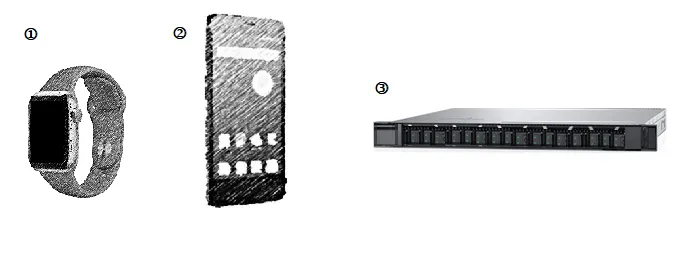
Photo: JJ.FLEURY, CC BY-SA 4.0, via Wikimedia Commons
For years, the conversation around idle compute has centered on the data center—those rows of underutilized servers humming through the night, processing nothing, costing everything. The frameworks built to address that waste are mature, well-documented, and increasingly well-supported by commercial tooling. But as enterprises accelerate their push toward edge deployments, a structurally different category of idle capacity is growing in the shadows, and most organizations have neither the architecture nor the strategy to address it.
Edge computing was sold on the promise of proximity. By situating processing closer to the point of data generation—whether that means a retail store floor, a manufacturing plant, a hospital wing, or a telecommunications tower—enterprises could reduce latency, limit bandwidth consumption, and in many cases satisfy regulatory requirements that prohibit sensitive data from traveling to centralized cloud environments. Those promises have largely held. What was not fully anticipated was the utilization profile that would emerge once those edge nodes were deployed at scale.
The Utilization Curve Nobody Modeled
Edge hardware is provisioned for peak demand. A retail edge node must handle the transaction volume of Black Friday. An industrial edge deployment must accommodate the sensor throughput of a full production shift. A healthcare edge appliance must be capable of processing imaging data during peak clinical hours. The result is infrastructure that spends a significant portion of its operational life doing very little.
This is not a new problem in isolation. What makes edge idle capacity distinctly difficult to address is the combination of constraints that surrounds it. Centralized idle compute can be pooled, brokered, and redistributed with relative architectural simplicity. Edge idle compute sits behind a series of walls—physical, regulatory, and technical—that existing idle-resource frameworks were not designed to navigate.
Latency requirements represent the first barrier. Many edge workloads exist at the edge precisely because they cannot tolerate the round-trip delay associated with centralized processing. When that same hardware sits idle between peak periods, redirecting its capacity to other workloads—whether internal or external—risks introducing contention that degrades the primary use case when demand returns. The scheduling logic required to guarantee headroom for latency-sensitive workloads while still extracting value from idle cycles is substantially more complex than what most organizations currently operate.
Data Sovereignty and the Compliance Ceiling
The regulatory dimension compounds the problem considerably. A significant share of edge deployments exist specifically because data cannot leave a defined geographic or organizational boundary. Healthcare data governed by HIPAA, financial transaction records subject to state-level privacy statutes, and manufacturing telemetry covered by export control regulations all represent categories of workload that arrived at the edge for compliance reasons.
When enterprises attempt to monetize or reuse that idle capacity—either by contributing it to a distributed compute network or by running secondary workloads on the same hardware—they immediately encounter questions about data isolation, workload provenance, and audit trail integrity. Can a hospital edge node safely run a non-clinical inference workload during overnight hours without creating compliance exposure? Can a financial services edge deployment accept compute tasks from another business unit without triggering data residency concerns? In most current architectures, the answer is uncertain enough to make the attempt unattractive.
The irony is that data sovereignty requirements, which drove much of the initial investment in edge infrastructure, are now functioning as a ceiling on the value that infrastructure can generate.
The Hidden Cost of the Round-Trip
A third failure mode is less visible but financially significant. When enterprises recognize that their edge idle capacity is difficult to leverage locally, many default to routing overflow workloads back to centralized infrastructure. This seems like a pragmatic workaround, but it introduces costs that are rarely captured in the original capacity analysis.
Data movement is not free. Egress fees from cloud providers, bandwidth consumption on private WAN circuits, and the latency penalties associated with centralized processing all represent real expenditures. For enterprises operating large edge footprints—dozens or hundreds of nodes across distributed locations—the cumulative cost of routing idle-period workloads back to central infrastructure can rival or exceed the cost of simply leaving that capacity unused. Neither outcome represents efficient resource utilization.
Architectural Patterns Worth Examining
Some organizations are beginning to develop responses to these constraints, though the field remains early-stage. Several architectural patterns are emerging as candidates for broader adoption.
Federated idle scheduling separates the control plane from the data plane in ways that allow compute tasks to be allocated to edge nodes without requiring data to move between nodes. Under this model, a distributed compute network can dispatch workloads to idle edge hardware while ensuring that any data generated or consumed by those workloads remains within the node's defined boundary. The orchestration complexity is non-trivial, but the approach addresses both the latency-reservation problem and a subset of the sovereignty concerns.
Workload classification and tiering involves categorizing potential secondary workloads by their sensitivity to latency contention and their data handling requirements, then maintaining a pre-approved catalog of tasks that can be safely dispatched to specific categories of edge hardware. This reduces the per-dispatch decision overhead and allows automated scheduling systems to act on idle capacity without requiring human review of each allocation.
Localized compute brokering represents a more ambitious approach in which enterprises operating dense edge footprints in a given geography—a cluster of retail locations in a metropolitan area, for instance—establish internal exchange mechanisms that allow idle capacity at one node to serve workloads generated by another node in the same regulatory jurisdiction. This preserves data residency while enabling utilization improvements that a single-node perspective would not reveal.
What Distributed Compute Networks Must Evolve to Address
For platforms built around the principle of putting idle compute to work, the edge environment represents both a significant opportunity and a genuine architectural challenge. The volume of idle capacity accumulating at the edge is substantial and growing. The enterprises that own that capacity are, in many cases, actively looking for ways to extract value from infrastructure investments that are not delivering their projected returns.
But connecting that capacity to productive workloads requires a level of constraint-awareness that centralized idle compute networks were not originally designed to provide. Latency reservation guarantees, compliance-boundary enforcement, data isolation attestation, and jurisdiction-aware workload routing are not optional features in an edge context—they are prerequisites for participation.
Organizations that treat edge idle capacity as simply another pool of available compute will find that the constraints render most of it inaccessible. Those that invest in the architectural specificity required to operate within those constraints will find that a meaningful share of edge idle capacity is, in fact, monetizable—provided the framework is built to accommodate the environment rather than abstract it away.
The edge is not the data center. The strategies that work at the center of the network require substantial adaptation before they function at the periphery. That adaptation is overdue.