No Cloud, No Problem: One Founder's Experiment Building a SaaS Product on Borrowed Machines
The invoice that never arrived was the point.
When Maya Ortiz left her job at a Denver-based logistics software firm to build a document-intelligence product for regional insurance brokers, she made a decision that raised eyebrows in every founder group chat she belonged to: she would not open a cloud account. No hyperscaler regions, no managed Kubernetes, no monthly bill that grows faster than revenue. Instead, her entire production stack — inference, storage, the works — would run on machines that already existed and were, for most hours of the day, doing nothing.
Her experiment is a useful case study in what happens when a startup treats idle compute not as a sustainability talking point but as its actual infrastructure strategy.
The Fleet That Has a Day Job
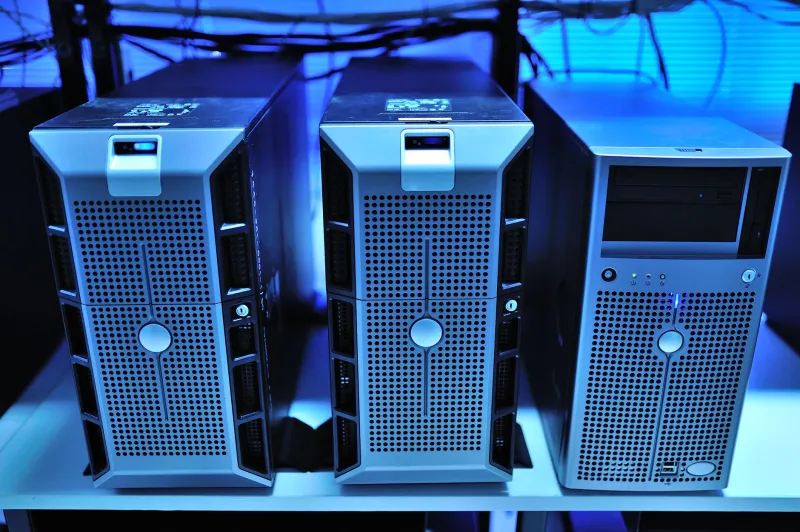
Ortiz's network consisted of roughly forty machines across three pools. The first was her own hardware: two GPU workstations in her garage that sat unused while she slept. The second was a peer arrangement with a small architectural rendering studio in Boulder whose render farm went quiet after 6 PM Mountain Time. The third was a handful of rented consumer-grade GPUs sourced through a decentralized marketplace — machines owned by hobbyists and small businesses who were paid per hour of actual utilization.
The architecture decisions followed directly from the constraint that no single machine could be trusted to exist tomorrow. Workloads were chunked into small, idempotent tasks. A coordinator service, itself running on one of her own machines, distributed document-processing jobs with aggressive timeouts. Results were written to an object store on her own hardware with a second copy on a machine in the Boulder office. Nothing assumed a node would still be alive in twenty minutes.
"The mental shift," she says, "is that you stop building services and start building a supply chain for compute. A node isn't a server. It's a supplier that can walk away at any moment."
The Outages That Taught the Lessons
The first serious incident came eleven days after launch. The rendering studio ran a large client job late into the evening — unannounced — and half the fleet vanished mid-workload. Because jobs were idempotent and checkpointed, nothing was lost, but queue latency tripled and two customers saw processing times slip from ninety seconds to nearly ten minutes.
The fix was not more capacity. It was a contract. Ortiz drafted a simple written agreement with her supplier partners specifying quiet hours, notification requirements, and a small penalty for unannounced reclamation. It reads more like a freelance arrangement than a hosting agreement, and that, she argues, is exactly the right mental model. Reliability on borrowed machines is a relationship-management problem before it is a technical one.
The second incident was subtler: a hobbyist's machine in the marketplace pool began returning subtly corrupted inference results, likely due to an overheating GPU. Her pipeline's checksum-and-retry layer caught it, but only because she had built verification in from day one. On a cloud provider, she concedes, she probably would have skipped that layer. On a fleet of strangers' hardware, it is non-negotiable.
The Ledger
The cost breakdown after her first full quarter of operation:
- Marketplace GPU rental: roughly $210 per month, paid only for hours actually used
- Hardware amortization on her own two workstations: approximately $90 per month
- Payments to supplier partners (the render studio, in the form of a barter arrangement plus a modest stipend): the equivalent of about $75 per month
- Electricity: under $40 per month
Total: a little over $400 monthly, against a comparable cloud-based architecture she estimates at $1,600 to $2,200 — with the caveat that her own engineering time is the hidden subsidy. Building failure-tolerant, self-verifying pipelines took her roughly three extra weeks that a managed platform would have absorbed.
What Transfers to the Enterprise
Solo-founder scrappiness is easy to dismiss, but the underlying mechanics scale in principle. Enterprises already own enormous quantities of underutilized hardware — desktop fleets after hours, test environments that never sleep but never work, decommissioned servers awaiting disposal. The questions Ortiz answered in miniature are the same ones an enterprise internal compute program must answer: how do you schedule around a node's primary obligation, how do you verify results from hardware you don't control, and how do you formalize trust with the people whose machines you're borrowing?
Her answer to all three is the same: treat idle compute as a supply chain, not a data center. Suppliers get contracts. Deliveries get inspected. Shortfalls get buffered.
There is also a cultural observation worth carrying back to any engineering organization. Ortiz notes that knowing every watt came from a machine with a day job changed how she built software. Waste stopped being abstract. "When your cluster is forty actual computers in actual rooms," she says, "you can't pretend capacity is infinite. And weirdly, that made the product better."
The two-week CTO fantasy — one person, one laptop, one hyperscaler console — is being quietly challenged by a different archetype: the founder who looks at the machines already humming in the world and asks why any of them should be idle while her startup waits in line.