Basement Racks and Borrowed Cycles: Inside the American Home Lab Movement Quietly Feeding Enterprise Compute
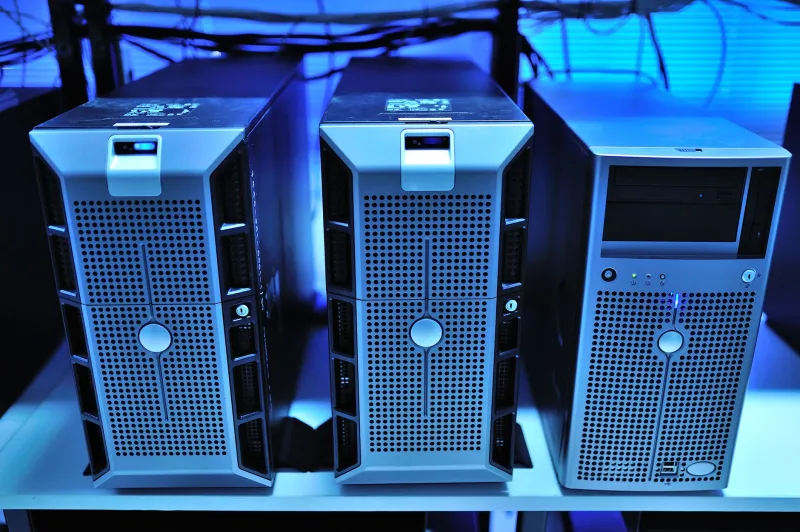
Somewhere in suburban Ohio, a network engineer is running forty-two rack-mounted servers beneath his stairwell. In a Colorado garage, a community college instructor maintains a GPU cluster cobbled together from secondhand RTX 3090s. Neither of them works for a cloud provider. Both of them are part of one of the most interesting — and least covered — compute stories in the United States: the home lab economy.
What began as a hobbyist subculture on forums like Reddit's r/homelab and r/DataHoarder has matured into something with measurable economic weight. These builders acquire decommissioned enterprise hardware at auction, negotiate surplus deals through liquidators, and operate at electricity rates that no colocation facility can match. The result is a distributed fleet of machines whose cost per unit of compute is, in many cases, the lowest in the country.
The Economics of the Surplus Rack
The foundation of the home lab economy is the secondary market for enterprise hardware. When a Fortune 500 company refreshes its data center, the outgoing servers do not simply disappear. They flow through brokers, government surplus auctions, and eBay resellers, where a two-socket server that listed for $12,000 five years ago can be had for a few hundred dollars.
Layer on top of that the reality of American residential electricity — roughly 16 cents per kilowatt-hour on average, and lower in states like Texas, Washington, and Louisiana — and the math becomes striking. A hobbyist running a 1.5 kW cluster around the clock pays on the order of $190 a month for capacity that would cost several times that in a commercial environment, before even accounting for colocation fees, support contracts, and egress charges.
For years, this arithmetic stayed a private joke among enthusiasts. That is changing.
From Hobby to Handshake
The second act of the home lab story is aggregation. A single basement cluster is a curiosity. Ten thousand of them, coordinated through a scheduling layer, are a credible distributed computing network.
Several university research groups have begun experimenting with exactly this model, renting spare cycles from vetted hobbyist nodes for workloads that are latency-tolerant but compute-hungry: protein folding simulations, rendering batches, statistical resampling, and small-scale model fine-tuning. The pattern echoes earlier distributed efforts like Folding@home and the Berkeley Open Infrastructure for Network Computing, but with a modern twist — instead of volunteers donating cycles, participants are compensated, and the workloads are chosen specifically for their tolerance of the network's inherent variability.
That tolerance is the key design constraint. Distributed networks built on residential hardware cannot promise the determinism of a hyperscale data center. What they can promise is cost. For workloads where a job finishing in four hours instead of two is acceptable, the trade is often overwhelmingly favorable.
Why Enterprises Are Paying Attention
Enterprise technology leaders hunting for relief from cloud bills have noticed. A growing number of compute-intensive but deadline-flexible workloads — nightly analytics, media transcoding, batch inference — are candidates for exactly this kind of capacity. The question is no longer whether idle or low-cost compute can absorb such work, but whether governance and trust models can catch up.
The challenges are real. Residential nodes sit outside conventional compliance perimeters. Availability is probabilistic rather than guaranteed. Network egress from consumer ISPs introduces variability that enterprise architects must design around. Any organization serious about tapping this capacity needs workload isolation, result verification, and a contractual framework that most procurement departments have never drafted.
Yet the direction of travel is clear. Just as spot markets forced enterprises to build interruption-tolerant architectures, distributed hobbyist capacity is pushing the same discipline further down the cost curve. The organizations that build the tooling — verification layers, reputation systems, scheduling middleware — will define how this capacity gets consumed.
The Cultural Engine
What makes the American home lab movement durable is that it is not primarily motivated by money. The community's roots are in tinkering: the satisfaction of a tidy cable run, a well-tuned Kubernetes dashboard, a storage array that has hummed through three power outages. Compensation is a bonus, not the point.
That matters for the network's resilience. Volunteer-driven distributed systems have historically outlasted purely mercenary ones, because participants stay through outages and growing pains. A compute network built on people who love their machines behaves differently from one built on people who merely rent them.
What Comes Next
The most likely trajectory is a hybrid one. Hyperscale clouds will continue to own latency-sensitive and compliance-bound workloads. Distributed networks of professional data centers will occupy the middle tier. And at the long tail of cost, the basement racks of America will absorb the batch jobs, the render queues, and the research workloads that never needed a data center in the first place.
For the hobbyists, the stakes are modest but meaningful — a power bill offset, a rack that finally pays for itself. For enterprises watching their compute line items climb, the lesson is larger: the cheapest capacity in the market may already exist, humming quietly in someone's basement, waiting for a workload worth running.