Beyond Spot Instances: The Case for Building an Internal Compute Exchange Inside Your Organization
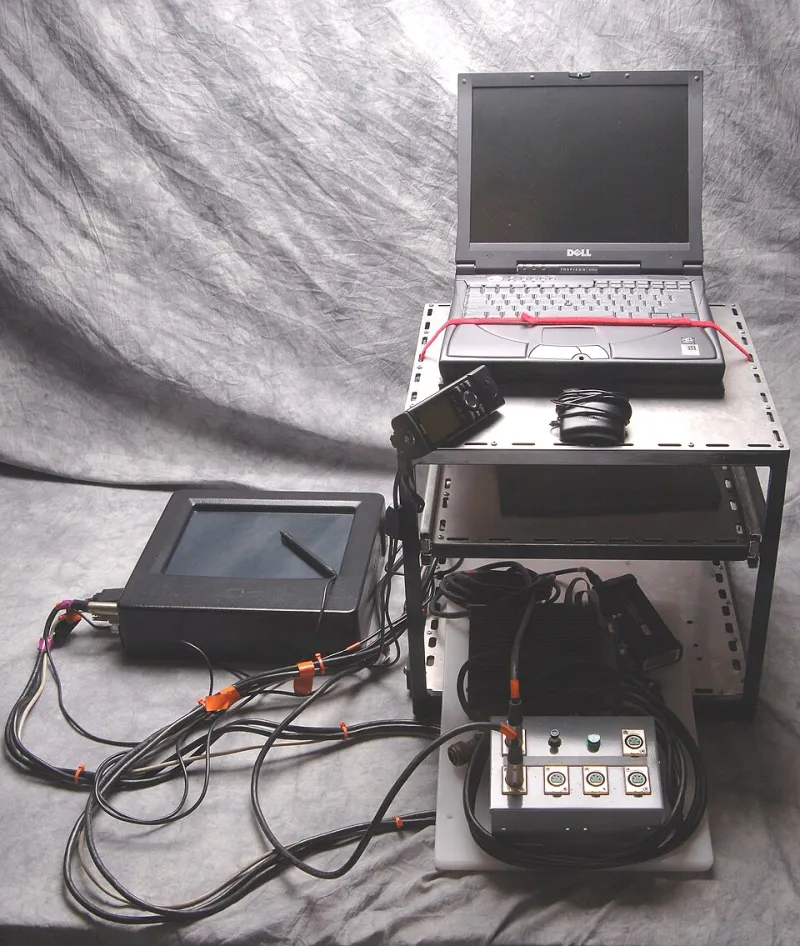
Photo: R6, State & Private Forestry, Forest Health Protection, Public domain, via Wikimedia Commons
Let's be direct about something the cloud industry prefers to obscure: spot markets exist primarily because excess capacity is a liability for cloud providers, and dynamic pricing is an elegant mechanism for converting that liability into revenue. When AWS introduced EC2 Spot Instances in 2009, it was celebrated as a gift to cost-conscious developers. In practice, it was a sophisticated yield management tool that transferred capacity risk to the customer while keeping pricing control firmly with the vendor.
This is not a criticism of spot markets per se. For organizations without significant owned infrastructure, they remain a legitimate cost-reduction lever. But for enterprises sitting on substantial idle compute assets—and the data consistently suggests that most large organizations are—the spot market framework represents a fundamental misalignment. You are paying a vendor to give you discounted access to capacity you do not own, while your own hardware idles in a data center down the street.
The more logical response, and the one that a growing cohort of infrastructure-forward enterprises is now pursuing, is to build the exchange internally.
What an Internal Compute Exchange Actually Means
The term "internal compute exchange" is still earning its definition in enterprise technology circles, which means it risks meaning different things to different teams. For the purposes of this analysis, a compute exchange is a governed internal marketplace in which organizational units—business lines, departments, product teams—can offer surplus compute capacity and bid for processing resources, with pricing mechanisms that reflect actual supply, demand, and opportunity cost.
This is meaningfully different from a shared services model or a standard private cloud deployment. A shared services arrangement allocates compute through centralized planning and IT governance. An exchange allocates it through price signals, usage forecasting, and market-clearing mechanisms. The distinction matters because price signals carry information that administrative allocation does not: they reveal which teams genuinely value compute resources enough to pay for them, and which teams have been hoarding capacity as an organizational hedge.
The difference between the two approaches, at scale, can represent millions of dollars in recovered efficiency.
Why Spot Markets Fall Short for Mature Enterprises
Public cloud spot markets fail the mature enterprise on at least three dimensions that internal exchanges are specifically designed to address.
Opacity of true cost. Spot pricing reflects the cloud vendor's capacity situation, not your organization's. An internal exchange, by contrast, can incorporate the full cost stack of your owned infrastructure—depreciation, power, cooling, staffing, and opportunity cost—into a pricing model that reflects what compute actually costs your organization to produce. This visibility is transformative for capital planning and budget governance.
Externalization of capacity risk. Spot instances can be interrupted with minimal notice. For enterprises with predictable internal workload patterns—and most large organizations have far more predictable compute demand than they acknowledge—building an exchange over owned idle capacity offers interruption profiles that can be engineered and managed rather than accepted as a vendor's prerogative.
Absence of organizational learning. Every dollar spent on a spot instance leaves the organization. Every transaction on an internal exchange generates data: which teams are compute-constrained, which are chronically over-provisioned, where demand spikes are predictable, and where capacity investments would generate the highest return. That data is an organizational asset. Outsourcing the exchange to a cloud vendor means outsourcing that intelligence as well.
The Architecture of a Functioning Internal Exchange
Building a compute exchange is an organizational undertaking as much as a technical one. The technical components—an orchestration layer, a resource registry, a pricing engine, a billing interface, and a monitoring stack—are available in various forms through open-source projects and commercial platforms. The organizational components are harder.
Successful internal exchanges share several structural characteristics worth examining closely.
Transparent chargeback with real-time visibility. Teams participating in the exchange must be able to see, in near real-time, what they are consuming and what it is costing them. Delayed or opaque billing destroys the price signal that makes the exchange valuable. Organizations that have deployed monthly chargeback summaries as a substitute for real-time visibility have uniformly reported that behavioral change—the actual conservation and reallocation of compute—does not follow.
Dynamic pricing that responds to actual utilization. A fixed internal price for compute is better than no price, but it is not an exchange. Genuine exchanges adjust clearing prices based on current supply and demand, creating incentives for teams to shift non-urgent workloads to off-peak periods and to release idle reservations when they are not actively needed. Several enterprises have implemented simple auction mechanisms for peak-period capacity, with results that consistently surface demand patterns invisible under flat-rate pricing.
Forecasting infrastructure with organizational teeth. Usage forecasting is only valuable if teams are held accountable to their forecasts. Exchanges that allow teams to reserve capacity with no penalty for non-utilization quickly devolve into the same hoarding behavior that makes compute inefficiency so persistent. Effective exchanges incorporate reservation expiration policies, utilization minimums, and in some cases financial penalties for chronic over-reservation.
Governance with genuine authority. The internal exchange requires an operator—a team or function with the authority to set pricing policy, adjudicate disputes, manage capacity additions, and enforce participation rules. In most enterprises, this function does not currently exist in a coherent form. Creating it requires organizational will that goes beyond the technology investment.
The Transparency Dividend
Perhaps the most underappreciated benefit of the internal compute exchange is not efficiency or cost reduction—it is organizational transparency. Enterprises that have implemented functioning internal markets consistently report that the exercise of pricing compute reveals structural dysfunctions that were previously invisible to leadership.
Teams that claimed compute scarcity as the limiting factor in product development often turn out to be compute-affluent when their actual utilization is measured and priced. Conversely, teams that have been making do with inadequate resources—accepting slower iteration cycles and longer processing times as a fixed constraint—suddenly become visible as genuinely compute-constrained when their willingness-to-pay is surfaced through exchange participation.
This information changes capital allocation decisions. It changes hiring decisions. In several documented cases, it has changed strategic prioritization at the business unit level. The exchange, in other words, is not merely a compute efficiency tool. It is an organizational intelligence mechanism.
A Measured Endorsement With a Caveat
Building an internal compute exchange is not the right move for every organization. Enterprises with limited owned infrastructure, highly variable and unpredictable workloads, or insufficient engineering capacity to operate an internal marketplace will likely find that the overhead exceeds the benefit. For those organizations, optimizing participation in public spot markets remains the more practical path.
But for large enterprises with substantial owned hardware, multiple business units with divergent compute demand profiles, and a genuine commitment to compute cost transparency, the internal exchange is not merely a viable alternative to the public spot market. It is a superior one. The idle compute sitting in your infrastructure today is not just a cost to be minimized—it is an asset to be priced, traded, and put to work. The exchange is how you build the market to do that.