Your CPU Is Earning Nothing at 3 AM: A Developer's Practical Roadmap to Passive Income Through Idle Compute

Photo: Wiki Education Foundation, CC BY-SA 4.0, via Wikimedia Commons
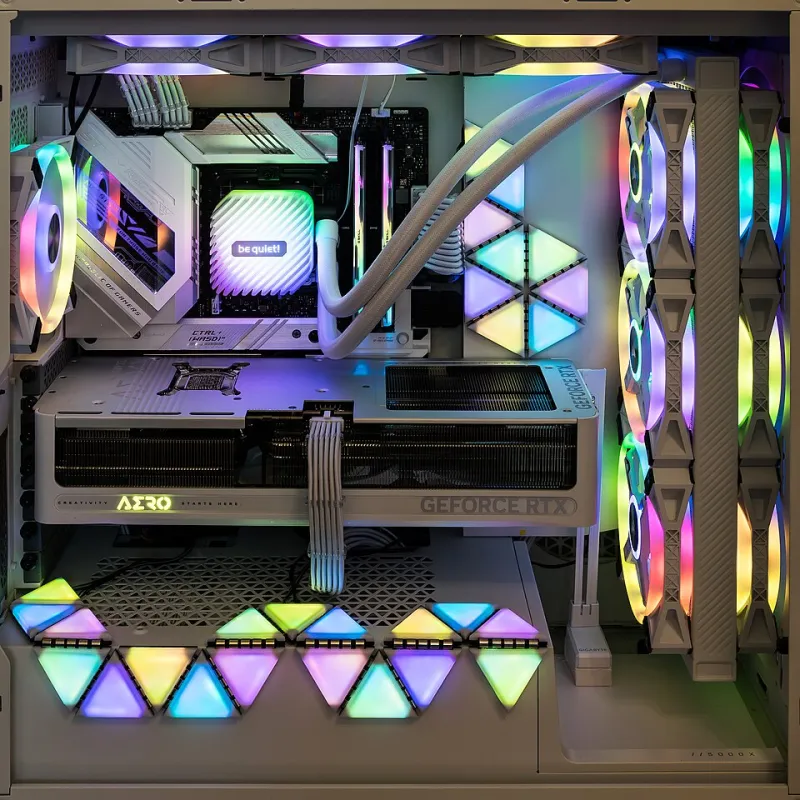
Most developers own hardware that would make an enterprise IT manager envious. High-core-count processors, substantial RAM, fast NVMe storage, and in many cases discrete GPUs capable of serious parallel computation. That hardware sits powered on—or in sleep states that still draw meaningful electricity—for hours each day while performing no billable or productive work.
Distributed computing networks have created a market for that dormant capacity. The premise is straightforward: enroll your machine in a network, configure which resources you are willing to contribute and during which hours, and receive compensation when the platform routes workloads to your hardware. The mechanics vary by platform, but the fundamental value exchange is consistent across the category.
This guide is written for developers and small-scale operators in the United States who want to evaluate idle compute participation seriously—not as a get-rich-quick proposition, but as a legitimate supplementary revenue stream with known parameters and manageable risks.
Understanding What You Are Actually Selling
Before calculating potential earnings, it is worth being precise about the commodity being traded. Distributed compute networks purchase access to processing resources—CPU cycles, GPU compute units, RAM, and in some configurations, storage and network bandwidth. You are not selling your hardware; you are leasing its capacity during periods when you are not using it.
The distinction matters because it shapes both the earnings model and the risk profile. Your hardware continues to depreciate regardless of whether it participates in a distributed network. The incremental wear from additional CPU utilization is real but, for modern processors operating within thermal limits, generally modest. The relevant question is whether the revenue generated during idle hours justifies the marginal electricity cost and the small acceleration in hardware wear.
Hardware Profiles and Realistic Earnings Ranges
Earnings vary significantly based on hardware specifications, local electricity rates, and the specific platform and workload type. The following estimates are illustrative ranges drawn from reported developer experiences and publicly available platform documentation, not guarantees.
Mid-range developer workstation (8-core CPU, no discrete GPU, 32GB RAM): A machine in this configuration, contributing CPU capacity for approximately eight hours per night and on weekends, might realistically generate between $15 and $45 per month on established CPU-focused platforms, depending on demand conditions and local electricity costs averaging $0.12–$0.16 per kilowatt-hour.
High-specification workstation with discrete GPU (16-core CPU, RTX 3080 or equivalent, 64GB RAM): GPU compute commands meaningfully higher rates than CPU-only capacity. Developers with modern gaming or professional GPUs report monthly earnings in the $60–$180 range for comparable idle-hour contributions, with GPU-intensive workloads such as machine learning inference and rendering carrying premium rates.
Dedicated participation hardware (purpose-built or repurposed server): Some developers operate dedicated machines specifically for distributed compute participation. A repurposed workstation with multiple GPUs, running continuously, can generate $300–$700 per month on high-demand platforms—though this shifts the model from passive income supplementation toward a more active, capital-intensive operation.
A backend developer in Austin, Texas, who contributed a gaming workstation equipped with an RTX 3090 to a distributed rendering network for six months, reported net earnings of approximately $95 per month after electricity costs. "It required maybe two hours of setup and perhaps thirty minutes of occasional configuration adjustments," he noted in a developer forum discussion. "For a machine that was already powered on, it was straightforward supplementary income."
Technical Setup: What the Process Actually Involves
Participation in most established distributed compute networks requires a modest but non-trivial technical setup process. Developers comfortable with command-line interfaces and basic system configuration will find the process accessible; less technically experienced operators may encounter a steeper initial learning curve.
Typical setup steps include: creating a verified account on the chosen platform, downloading and installing the network's client software or container runtime, configuring resource allocation parameters (CPU core limits, GPU assignment, RAM ceiling, bandwidth caps), and establishing a payout wallet or account. Most platforms support Windows, macOS, and common Linux distributions, though GPU compute participation frequently performs best on Linux with current driver configurations.
Important configuration decisions include setting hard limits on resource utilization to ensure your own workflows are not disrupted during working hours, configuring thermal monitoring to prevent sustained operation above safe temperature thresholds, and establishing automatic pause rules tied to battery status if contributing from a laptop.
Security review of the client software is advisable before installation. Reputable platforms publish open-source clients or provide verifiable binaries, maintain active developer communities, and have established track records. Newer or less-documented platforms warrant additional scrutiny.
Profitability Calculations: The Electricity Variable
Electricity cost is the single largest variable in the profitability equation for most US developers. The national average residential electricity rate is approximately $0.16 per kilowatt-hour, but rates vary substantially by state—from roughly $0.10 in states like Louisiana and Idaho to over $0.25 in California and Hawaii.
A workstation drawing 200 watts continuously over eight idle hours consumes 1.6 kilowatt-hours. At a national average rate, that represents approximately $0.26 in electricity cost per night, or roughly $7.80 per month. For a machine generating $45 monthly in CPU compute earnings, the net margin is meaningful. For a developer paying $0.25 per kilowatt-hour, the same machine generates $11.70 in monthly electricity cost—still profitable at $45 gross earnings, but the margin compresses noticeably.
Developers in high-rate electricity markets should model their specific costs carefully before committing to participation, particularly for CPU-only configurations where margins are thinner than GPU compute scenarios.
Risk Considerations Every Participant Should Weigh
Distributed compute participation carries risks that deserve honest acknowledgment rather than dismissal.
Platform risk is primary. Not all distributed compute networks are financially stable or technically reliable. Platforms can reduce payout rates, change terms, or cease operations. Diversifying participation across two or more established platforms mitigates concentration risk.
Hardware longevity is a secondary concern. Sustained high-utilization operation accelerates thermal cycling and component wear. Proper thermal management—ensuring adequate airflow, maintaining clean cooling systems, and setting appropriate utilization caps—substantially reduces this risk, but does not eliminate it.
Tax treatment in the United States requires attention. Earnings from distributed compute participation are generally treated as self-employment income or miscellaneous income, depending on scale and structure. Participants should maintain records and consult a tax professional if earnings become material.
Workload transparency varies by platform. Some networks provide detailed information about the types of computations being processed on participant hardware; others offer less visibility. Developers with concerns about the nature of workloads their hardware may execute should prioritize platforms with clear workload disclosure policies.
Positioning Idle Compute as Part of a Broader Developer Income Strategy
For most developers, idle compute participation will not replace primary income. It functions most effectively as one component of a diversified supplementary income strategy—alongside consulting work, open-source sponsorships, or digital product sales—where the defining characteristic is that it requires minimal ongoing time investment once configured.
The developers who report the highest satisfaction with distributed compute participation tend to share a common framing: they are not primarily optimizing for maximum revenue extraction from their hardware. They are recovering a portion of the electricity cost of hardware they would be running regardless, while contributing to a computational infrastructure model they find technically interesting. The income is real and worth capturing. But the more durable value proposition, for many in this community, is participation in a network architecture that puts idle resources to genuinely productive use.