Compliance in the Gaps: The Hidden Regulatory Cost of Distributing Workloads Across Idle Resources
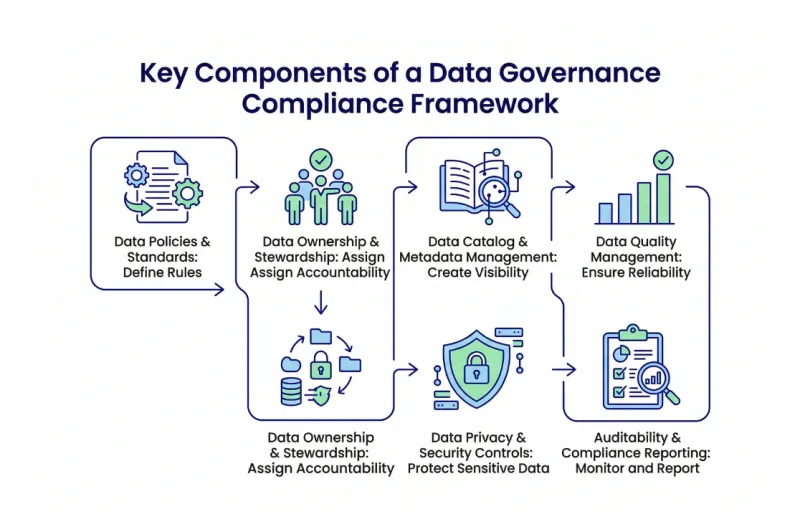
Photo: enterprise data compliance network server room regulation audit, via www.bluent.com
For most enterprises, the appeal of idle compute is straightforward: processing capacity that already exists on the balance sheet, available at a fraction of the marginal cost of provisioning new cloud instances. The economic logic is difficult to argue with. What is easier to overlook — until it is not — is the regulatory surface area that expands each time a workload moves across a jurisdictional boundary, even an internal one.
This is the compliance cold chain problem. Just as temperature-sensitive goods require an unbroken chain of custody to remain viable, sensitive data workloads require an unbroken chain of documented, enforceable compliance controls to remain legally defensible. When enterprises begin leveraging idle resources distributed across regional offices, co-location facilities, or partner networks, that chain develops gaps. And gaps, in the current regulatory environment, translate directly into liability.
What Traditional Cloud Providers Abstract Away
One reason this problem is underappreciated is that hyperscale cloud providers have historically absorbed much of the compliance complexity on behalf of their enterprise customers. AWS, Azure, and Google Cloud each maintain extensive certification portfolios — SOC 2, ISO 27001, FedRAMP, HIPAA Business Associate Agreements — and their infrastructure is architected with data residency controls that allow customers to pin workloads to specific regions with reasonable confidence.
When an enterprise begins routing jobs through idle compute nodes that exist outside this managed environment, those abstractions disappear. A processing node sitting in a Chicago office building does not inherit the compliance posture of a certified cloud region. It inherits the compliance posture of whatever controls the enterprise has actually implemented at that location — which, in many cases, has never been formally assessed.
The result is a tiered compliance environment where some workloads are well-governed and others exist in a state of ambiguous documentation that would not survive a serious audit inquiry.
Data Residency Is Not Just a Foreign Concern
A common assumption among US-based enterprises is that data residency obligations are primarily a European problem — the product of GDPR and similar frameworks that have limited domestic applicability. This assumption is increasingly incorrect.
State-level privacy legislation has accelerated considerably since the California Consumer Privacy Act took effect in 2020. Virginia, Colorado, Connecticut, Texas, and Oregon have each enacted comprehensive consumer data privacy laws with varying requirements around data processing disclosures, purpose limitation, and cross-border transfer restrictions. Several additional states are at advanced stages of legislative consideration.
When a workload containing personal data is processed on an idle node in a state with active privacy legislation — even temporarily, even at 2 AM — the enterprise may have triggered a processing activity that requires disclosure, contractual coverage, or both. Whether that obligation has been satisfied depends entirely on documentation that most distributed compute deployments have not been designed to produce.
The Tax Nexus Complication
Beyond data privacy, there is a less-discussed exposure that enterprises building internal compute exchanges should assess carefully: tax nexus.
Under US state tax law, a company establishes nexus — and thus potential tax obligations — in a state when it conducts sufficient business activity there. The traditional triggers involve physical presence: offices, employees, inventory. But the nexus doctrine has expanded considerably in the post-South Dakota v. Wayfair landscape, and some states have begun examining whether the operation of compute infrastructure within their borders constitutes a taxable presence.
This is not a theoretical risk. Enterprises that operate idle nodes across multiple states, particularly if those nodes are processing work on behalf of external parties or internal cost centers that function as distinct business units, should obtain qualified tax counsel before assuming that existing nexus determinations remain accurate. The cost of a retroactive nexus finding — back taxes, penalties, and interest — can exceed the compute savings that motivated the distributed architecture in the first place.
Audit Trails That Distributed Systems Struggle to Produce
Among the most practical compliance challenges is documentation. Regulated industries — financial services, healthcare, government contracting — operate under audit regimes that require enterprises to demonstrate, with specificity, where data was processed, by whom, under what controls, and when.
Centralized cloud environments are reasonably good at producing this documentation. CloudTrail logs, access control records, and regional processing metadata are standard outputs of mature cloud governance programs. Distributed idle compute environments are not, by default, instrumented to the same standard. Nodes that were provisioned for internal workloads and later repurposed for batch processing may lack the logging depth required to satisfy a regulatory examiner.
Building audit-grade observability into a distributed idle compute network requires deliberate architectural investment. Enterprises should treat logging infrastructure as a compliance prerequisite rather than an operational afterthought — and should verify that log retention periods meet the requirements of every applicable regulatory framework before the first regulated workload touches an idle node.
Contractual Coverage Across the Compute Chain
Data processing agreements present another friction point. Under most US state privacy laws and federal sector-specific regulations, enterprises are required to execute data processing or business associate agreements with any third party that processes personal or protected data on their behalf. When idle compute resources are contributed by external parties — contractors, partners, or participants in a broader distributed network — those relationships require formal contractual coverage.
The challenge is that distributed compute arrangements do not always map cleanly onto the vendor relationship structures that legal and procurement teams are accustomed to managing. A node contributor who is technically a compute resource provider may also be, from a regulatory standpoint, a data processor — with all the contractual obligations that designation entails. Enterprises that have not worked through this classification exercise are likely operating with coverage gaps that a sophisticated regulator would identify quickly.
Building a Compliant Distributed Compute Architecture
None of this argues against the use of idle compute resources. The efficiency case remains compelling, and the technology for managing distributed workloads continues to mature. What it argues for is a compliance architecture that is designed alongside the technical architecture, not retrofitted after the fact.
Practically, this means several things. It means conducting a data classification exercise before routing workloads to distributed nodes, so that sensitive data is handled under appropriately documented controls. It means establishing node-level logging standards that satisfy the most demanding audit framework applicable to the enterprise's industry. It means reviewing state tax nexus positions with counsel before expanding compute geography. And it means building contractual frameworks that accurately characterize the legal relationship between the enterprise and every party that touches a regulated workload.
Enterprises that treat compliance as a constraint to engineer around will eventually encounter a regulatory outcome that reframes the economics of their distributed compute program entirely. Those that treat it as a design input will find that the efficiency gains of idle compute remain intact — and are significantly more durable.