The Procurement Paradox: Why Enterprises Are Paying Twice for Compute They Already Own
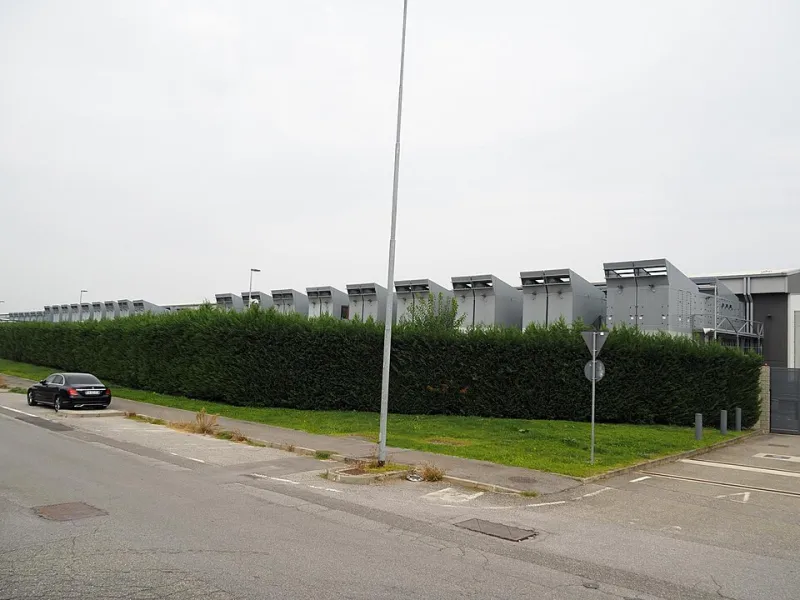
Photo: Tsgrayson, CC0, via Wikimedia Commons
Somewhere in a climate-controlled data center in northern Virginia—or perhaps in a colocation facility outside Chicago—a rack of servers is drawing power, accumulating depreciation, and contributing precisely nothing to your company's bottom line. It is not a hypothetical scenario. It is, according to a growing body of procurement data and CTO testimony, the default operating condition for a significant portion of enterprise compute infrastructure in the United States.
The question is no longer whether idle infrastructure represents a financial liability. The question is how large that liability has become, and what organizations are prepared to do about it.
The Anatomy of a Sunk Cost That Keeps Sinking
Enterprise procurement cycles are built on peak-demand assumptions. When a development team forecasts compute requirements for a major product release, they are, by necessity, planning for the ceiling—not the average. The result is infrastructure that is fully utilized during sprint cycles and testing surges, then left in a kind of productive limbo between projects.
Industry analysts have documented utilization rates in enterprise development environments that routinely fall below 30 percent when measured across a full fiscal year. Yet the costs associated with that infrastructure—power consumption, cooling overhead, licensing fees, facilities charges, and the staff required to maintain it—accrue continuously. A server that runs at 20 percent utilization does not cost 20 percent of its fully loaded operational expense. In most configurations, it costs somewhere between 60 and 80 percent, simply because fixed costs dominate the total.
For a mid-sized enterprise operating 500 to 1,000 servers in development and staging environments, this structural inefficiency can translate to millions of dollars annually in expenditure that generates no corresponding output.
What CTOs Are Actually Saying
In conversations with technology executives at organizations ranging from regional financial institutions to mid-market software companies, a consistent pattern emerges: the problem is widely understood, and largely tolerated.
"We've known for years that our dev environments are underutilized," acknowledged one CTO at a healthcare technology firm operating out of Atlanta. "The challenge is that the moment you deprovision capacity, you create a bottleneck the next time a team needs it. So you keep it provisioned and you absorb the cost."
This logic—maintain excess capacity as an operational buffer—is rational at the individual team level. Aggregated across an enterprise, however, it produces what might be called a silent tax on innovation. Every dollar allocated to maintaining dormant infrastructure is a dollar unavailable for the exploratory R&D that competitive technology organizations depend upon.
A director of infrastructure at a logistics software company in the Midwest put it more bluntly: "We did an audit two years ago and found that roughly 40 percent of our compute capacity was idle on any given weekday night. On weekends, it was closer to 65 percent. We were essentially renting a warehouse and leaving most of it empty."
Calculating the True Cost of Idle Infrastructure
Organizations seeking to quantify their idle compute liability should consider a framework that accounts for four primary cost categories.
Direct operational costs represent the most visible layer: power consumption, cooling, and facilities charges that accrue regardless of utilization. For on-premises infrastructure, this typically ranges from $0.08 to $0.15 per kilowatt-hour in total loaded cost, depending on geography and facility efficiency.
Depreciation and capital amortization constitute the second layer. Hardware provisioned for peak demand depreciates on a fixed schedule whether it is processing workloads or sitting idle. An enterprise that amortizes a $500,000 server deployment over five years is absorbing $100,000 in annual depreciation—a figure that does not diminish proportionally with utilization.
Licensing and support overhead form the third layer. Operating system licenses, virtualization platform fees, and vendor support contracts are typically structured as flat or per-seat arrangements that bear no relationship to actual compute utilization.
Opportunity cost is the fourth and most frequently overlooked dimension. Capital tied up in underutilized infrastructure is capital unavailable for other investments—whether in new product development, talent acquisition, or strategic initiatives.
When these four layers are aggregated, the true annual cost of maintaining idle development and testing infrastructure often exceeds the original procurement estimate by a factor of 1.5 to 2.
Distributed Networks as a Financial Recovery Mechanism
The emergence of distributed idle compute networks introduces a structural alternative to the traditional binary choice between maintaining excess capacity and accepting operational risk.
Rather than treating dormant infrastructure as an unavoidable cost center, forward-looking enterprises are beginning to treat it as a latent asset—one that can be monetized during periods of low internal demand by contributing cycles to distributed processing networks. The economics are straightforward: infrastructure that would otherwise generate zero return during off-peak hours can instead generate measurable revenue by fulfilling compute requests from external workloads.
This model does not require enterprises to surrender control of their infrastructure or compromise data security. Modern distributed compute platforms are architected to support workload isolation, with granular controls that allow organizations to define precisely which resources are available for external tasks, under what conditions, and subject to what access constraints.
For an enterprise carrying $2 million in annual idle compute costs, even a modest utilization improvement—say, converting 15 percent of dormant capacity into revenue-generating cycles—can produce a six-figure annual recovery. Scaled across a larger infrastructure footprint, the financial impact becomes materially significant.
From Cost Center to Contributor
The strategic framing matters as much as the financial arithmetic. Infrastructure that has historically appeared on the balance sheet as a pure cost is, under the distributed compute model, reclassified as a productive asset with a calculable yield. This reframing has implications not only for operational budgets but for how technology leadership justifies infrastructure investment to finance and executive stakeholders.
Several enterprises that have piloted idle compute monetization programs report a secondary benefit that was not anticipated in the original business case: the discipline required to instrument and monitor idle capacity for external workloads also produces better internal visibility into utilization patterns. Organizations that previously lacked reliable data on when and how their infrastructure was being used gain, as a byproduct, the observability infrastructure needed to make more informed procurement decisions going forward.
The silent tax on innovation, in other words, is not inevitable. It is the product of a procurement and operational model that treats compute capacity as a static resource rather than a dynamic one. Distributed networks offer an architectural alternative—one that aligns financial incentives with the physical reality of how enterprise infrastructure actually behaves across the full cycle of development activity.
The servers in that Virginia data center are still drawing power tonight. The only remaining question is whether they are doing it for free.