The Property Managers of Processing Power: Why Orchestration, Not Ownership, Will Define the Compute Economy
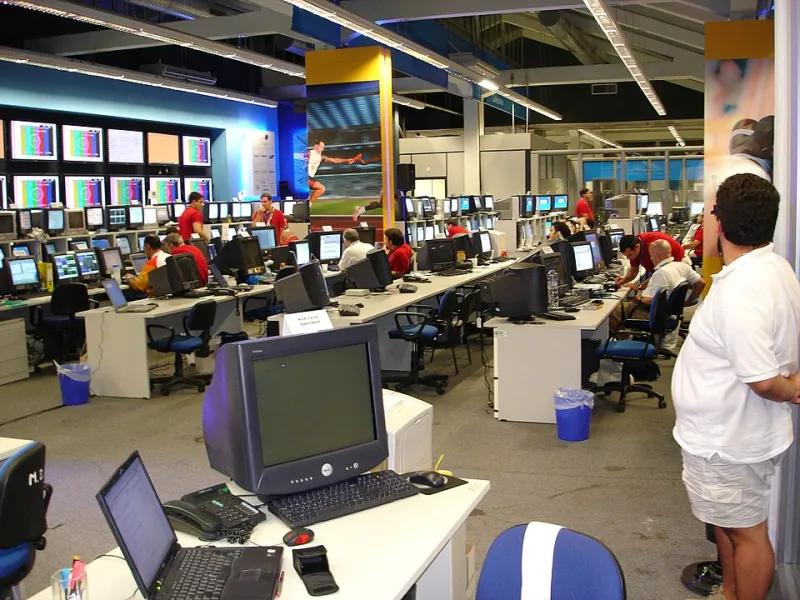
Photo: Mastman49631 at English Wikipedia, Public domain, via Wikimedia Commons
The most consequential infrastructure companies of the last fifteen years own almost nothing of what they sell. Uber does not own a fleet of sedans. Airbnb holds no deeds to the lofts it books in Austin or Asheville. What these firms control is the layer in between: the matchmaking, the trust mechanisms, the pricing intelligence, and the guarantees that make a stranger's asset feel like a dependable service. Distributed idle compute is now tracing the same arc, and the enterprises paying attention should recognize what it implies — the durable value in this market will accrue not to those who own machines, but to those who orchestrate them.
The Parallel Nobody Priced In
Consider how the ridesharing transition actually unfolded. Taxi medallions — once among the most expensive assets in American cities — collapsed in value not because cars stopped mattering, but because coordination became the scarce commodity. The vehicle was abundant; the system for matching a rider in Wicker Park with a driver headed downtown at 9 PM was not.
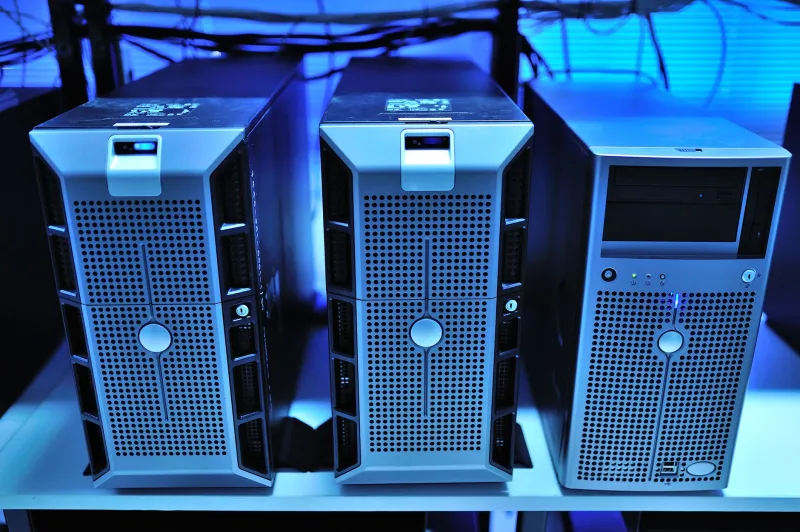
Compute is heading down a comparable road. Enterprises routinely run data centers at utilization rates that would alarm any CFO if framed honestly. Universities, mid-market firms, and even hyperscalers hold vast pools of dormant silicon — servers that idle overnight, GPU clusters that sit between training runs, workstations that spend most of their existence waiting. The hardware exists. The market for using it is forming. What remains scarce is the connective tissue: the verification, scheduling, and settlement infrastructure that lets a Fortune 500 workload run safely on capacity it does not own.
What the Middleman Actually Provides
It is tempting to dismiss intermediaries as margin-skimmers, but the property manager analogy is more precise than the middleman caricature. A good property manager does three things an individual owner cannot easily do alone: they standardize quality across a fragmented supply, they absorb the friction of disputes and maintenance, and they maintain a reputation system that lets demand trust supply at scale.
Translated to compute, the orchestration layer must solve several hard problems simultaneously:
- Trust and attestation. Can an enterprise verify that its workload ran where it was supposed to, on hardware meeting stated specifications, without leakage of proprietary data? Emerging approaches — from hardware-backed attestation to confidential computing enclaves — are the compute equivalent of the verified-photo-and-review system that made short-term rentals bookable.
- Scheduling and reliability. Idle capacity is, by definition, intermittent. Orchestrators must broker workloads that tolerate interruption, shard jobs across heterogeneous machines, and deliver SLAs that abstract away the messiness underneath. This is the compute rendition of a guaranteed check-in time.
- Settlement and pricing. A functioning market needs a price signal. Dynamic, usage-based settlement — metered, audited, and paid in near real time — replaces the fixed-cost rigidity of traditional colocation contracts.
None of these functions require owning a single server. All of them require deep engineering investment and, critically, network effects: every additional supplier makes the marketplace more attractive to buyers, and vice versa.
Why Ownership Is the Weaker Position
Hardware owners face a squeeze from both directions. On one side, capital costs, power contracts, cooling, and depreciation weigh on anyone who holds machines. On the other, the orchestration platforms that route demand can, over time, commoditize any individual supplier — much as individual hosts on rental platforms discovered that the platform, not the property, commanded customer loyalty.
This is not a forecast of hardware irrelevance. Machines must exist, and someone must fund them. But the economics will look like those of American trucking: asset-heavy carriers operate on thin, cyclical margins, while the freight-matching and logistics layers capture disproportionate, durable value. The pattern repeats across asset-sharing markets with remarkable consistency.
What Enterprises Should Watch
For technology leaders, three developments merit close attention.
First, the trust layer is maturing faster than expected. Confidential computing hardware is now standard in recent server generations, making it technically feasible to run sensitive workloads on infrastructure you do not control. The compliance conversation is shifting from 'whether' to 'under what contractual and attestation framework.'
Second, procurement is the entry point. The most natural beachhead for orchestrated idle compute is not production-critical services but the elastic, fault-tolerant workloads enterprises already treat as batch: rendering, simulation, model evaluation, scientific computing. Expect internal champions to justify adoption through these categories first.
Third, build-versus-broker decisions are arriving. Some large organizations will attempt to build internal compute exchanges across their own distributed estates — a defensible middle path. But even these internal markets will need orchestration software, and the vendors supplying it are the same ones positioning for the broader external market.
The Landlord's Dilemma, Restated
There is a certain comfort in owning things. Servers in a cage you can touch feel like assets on a balance sheet, and for decades they behaved like them. But asset comfort has a cost: underutilization, inflexibility, and exposure to a market that increasingly values coordination over custody.
The next generation of infrastructure companies will, in all likelihood, own very little of the silicon they broker. Their balance sheets will be light; their moats will be software, reputation systems, and liquidity. For suppliers of idle capacity, the question is not whether to participate but on whose terms. For buyers, the question is which orchestration layer earns the trust that ownership once provided by default.
The machines, in other words, are the least interesting part of the story. The property managers are already circling.