Render at Rest: Inside the Architecture Firm That Turned Empty Workstations Into a Rendering Farm
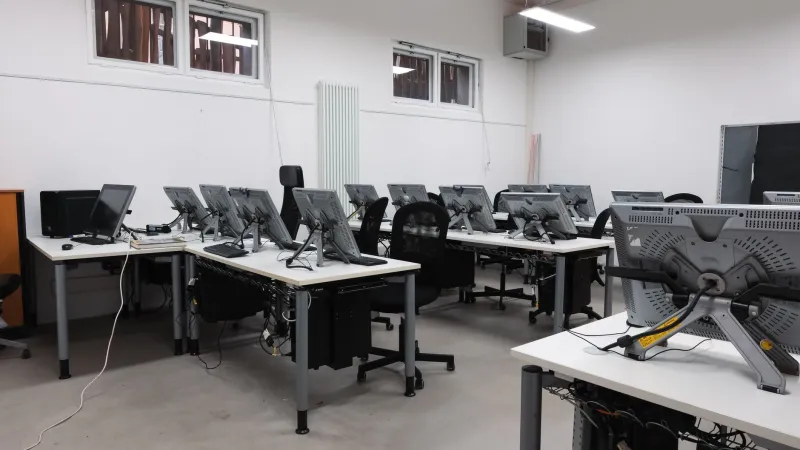
The spreadsheet that started it all was assembled by a junior IT technician at a forty-year-old architectural firm with offices in Chicago's Loop and two satellite studios in the suburbs. His assignment was mundane: catalog the firm's workstations for a hardware refresh. What he found was a pattern familiar to any company with a render-heavy pipeline — powerful machines, specified for 3D visualization and energy modeling, running at full specification for perhaps four hours a day and doing nothing but consuming standby power for the other twenty.
Meanwhile, the firm's cloud rendering invoices had crossed $130,000 annually. The mismatch was glaring: the firm was renting, by the hour, the very silicon it already owned.
The First Attempt, and the First Failure
Leadership approved a pilot: route overnight rendering jobs to idle workstations across the three offices using a commercial job scheduler. The first month was, in the words of the firm's director of technology, 'a humbling education in everything we hadn't thought about.'
Three failure modes dominated. First, employees would arrive to find their machines mid-render, fans roaring, applications unresponsive — the scheduler had no concept of office hours. Second, a Windows update pushed simultaneously to forty machines wiped out an entire weekend render queue. Third, and most expensive, the firm discovered that its VPN topology throttled cross-office transfers, so a job submitted in Chicago would sometimes spend longer shipping its scene files to a suburban workstation than actually rendering them.
The Rebuild: Scheduling, Not Scraping
The second attempt succeeded because the firm stopped treating idle compute as a scavenging problem and started treating it as an orchestration problem. The team selected a scheduling platform with three non-negotiable features: user presence detection that could preempt and checkpoint a job the moment a workstation's owner touched the keyboard; native integration with the firm's rendering software, so scene assets were distributed and collected automatically; and per-office capacity policies that respected VPN realities by keeping jobs local wherever possible.
Checkpointing proved to be the quiet hero. Once jobs could pause, snapshot, and resume, the fear of stealing someone's machine evaporated, and adoption — both by IT and by the designers whose machines were being borrowed — followed.
The Numbers, Eighteen Months Later
The firm now routes roughly 70 percent of its rendering and simulation workload to its own fleet, reserving cloud capacity for deadline surges and client-facing emergencies. Cloud spend has fallen by approximately 60 percent, translating to nearly $80,000 a year against a total implementation cost — software licensing, configuration labor, and one network upgrade — of under $25,000. Payback arrived in month five.
Lessons Worth Copying
Map before you migrate. The firm spent two full weeks profiling which workloads were bursty, which were latency-sensitive, and which were simply habitually sent to the cloud. That map drove every later decision.
Design for preemption first. Any system that borrows employee machines must assume the machine will be reclaimed without warning. Checkpointing is not a feature; it is the foundation.
Budget for the network. A distributed render farm is only as fast as its slowest file transfer. The firm's single capital expenditure — a modest upgrade to inter-office connectivity — unlocked more capacity than any software change.
Keep the cloud, shrink it. Retaining burst capacity preserved goodwill with project teams during the transition and became the pressure-release valve that made the whole model politically sustainable internally.
The firm's story is not exotic. It required no exotic hardware, no custom code, and no headcount additions — only a technician's spreadsheet, a leadership team willing to question a recurring invoice, and the recognition that the most cost-effective data center a company owns is usually the one it already paid for.