Three Sellers, One Tax Season: When Home Racks Stop Being a Hobby
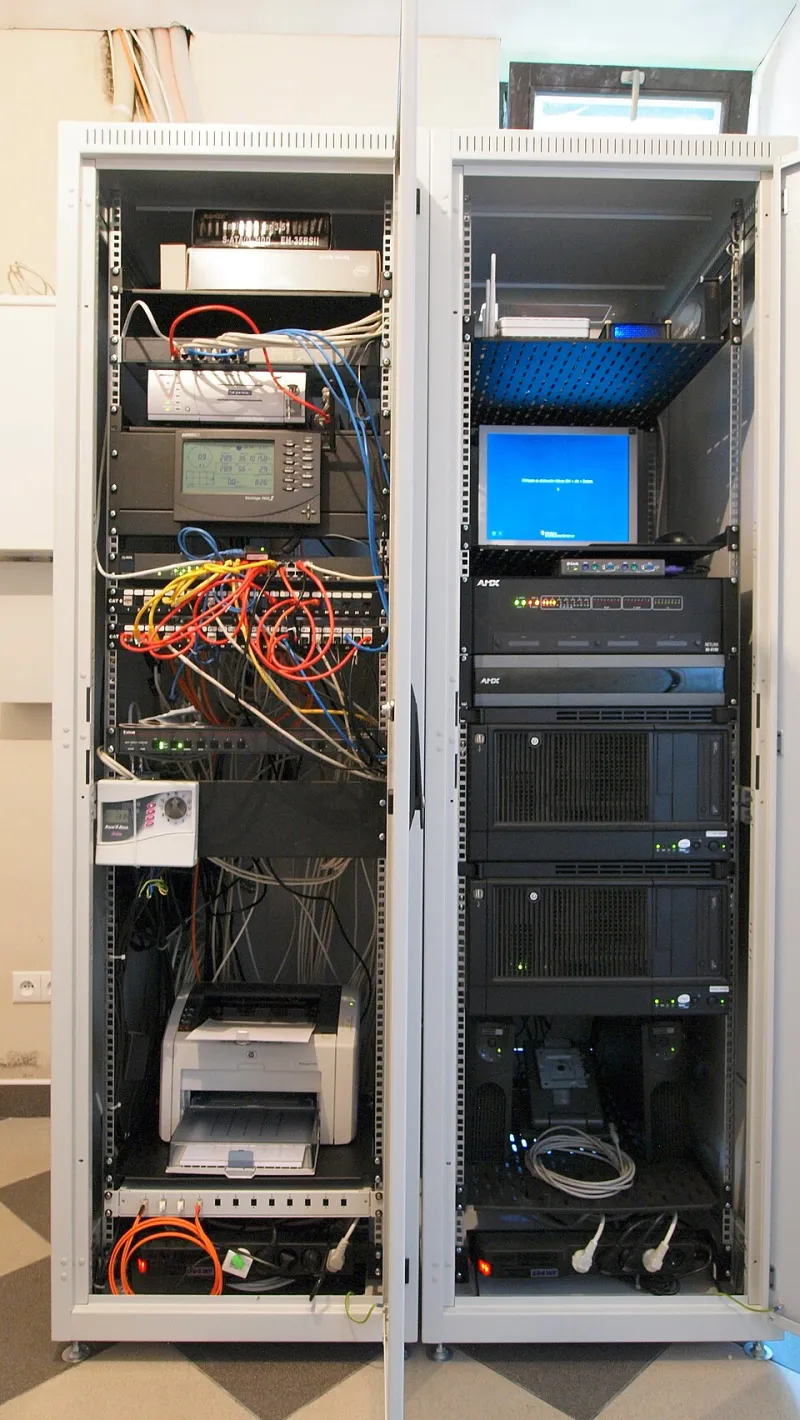
Photo: Jan Prucha, CC BY-SA 3.0, via Wikimedia Commons
For years, the economics of selling idle compute were simple in theory and messy in practice. Rent out spare GPU cycles, collect small payouts, ignore the paperwork. That era is ending. As payment volumes on distributed compute marketplaces climb, a growing cohort of American sellers is receiving something unfamiliar in the mail: a Form 1099-K. The moment that form arrives, a basement rack stops being a hobby and starts looking, to the IRS at least, like a business.
To understand what that transition actually looks like on the ground, it helps to follow three sellers whose situations are increasingly common.
The Accidental Sole Proprietor
Consider a Midwest IT administrator who began listing spare capacity from a home server cluster in 2022. For two years, payouts hovered under $1,000 annually — trivial, unreported, arguably immaterial. In 2024, demand for inference workloads pushed his annual payouts past $5,000. His platform issued a 1099-K automatically. He had made no estimated tax payments, tracked no expenses, and had no idea whether his hardware qualified for depreciation.
His situation illustrates the first structural problem: the reporting threshold dropped to $2,500 in 2024 and is scheduled to fall further, capturing a population of sellers who never thought of themselves as vendors. Once a 1099-K is issued, the income is visible. The question becomes whether it is reported as self-employment income on Schedule C, or treated as casual hobby activity — and the distinction matters enormously.
Hobby Versus Business: A Line Drawn in Behavior
Under current guidance, the IRS distinguishes a hobby from a business primarily by intent to profit. Consistent reinvestment, bookkeeping, marketing efforts, and a documented strategy all point toward business treatment. For compute sellers, the practical markers are straightforward: maintaining invoices, tracking electricity and depreciation, and operating with regularity.
The stakes are real. Hobby income is reported as miscellaneous income without the ability to deduct losses, while business income on Schedule C allows deduction of operating expenses — electricity, cooling, internet, hardware depreciation — but also triggers self-employment tax. A seller netting $5,000 in payouts with $3,500 in power and equipment costs may owe very little under business treatment and considerably more under hobby treatment. Many first-time filers guess wrong.
The Depreciation Question Nobody Anticipated
The second seller runs a small GPU farm in Nevada, purchased with a combination of savings and a personal loan. Her question is the one tax professionals report hearing most often: can the hardware itself be written off?
The answer is yes, in principle. Equipment used in a trade or business can be depreciated over its recovery period, or partially expensed under Section 179 in qualifying years. But compute hardware occupies awkward territory. Consumer-grade GPUs depreciate quickly and fluctuate in resale value; machines that double as gaming rigs raise mixed-use allocation questions. Assigning a defensible business-use percentage — 60%? 80%? — is more art than science, and sellers who overstate it are building audit exposure one return at a time.
The Platform Grey Zone
The third seller operates at a scale that exposes the gaps in the ecosystem. He aggregates capacity from a dozen friends' machines and distributes workloads, effectively running a micro-brokerage. His 1099-K reflects the full gross volume flowing through his accounts — not his net margin — because payment processors report gross transaction amounts.
This is the grey area platforms have not clarified: intermediaries who receive gross payments and pass most of them along may appear, on paper, to earn far more than they do. Marketplace documentation on how to substantiate pass-through payments remains thin. Some platforms have begun issuing supplementary statements, but there is no standardized reconciliation format, leaving sellers to construct their own paper trails.
What Sellers Should Be Doing Now
For Americans monetizing idle compute, the practical checklist is unglamorous but consequential:
- Track everything from day one. Electricity, bandwidth, hardware purchases, and platform fees should be logged contemporaneously, not reconstructed in March.
- Make estimated payments once net income is material. Quarterly estimated taxes are the standard expectation for self-employment income; waiting until filing season invites penalties.
- Document business intent. A simple operating log — hours spent, reinvestment decisions, revenue goals — strengthens business classification.
- Ask about pass-through treatment early. Sellers acting as intermediaries should consult a tax professional before the gross-vs-net question becomes a filing problem.
A Maturing Market Grows Up
None of this is a sign of decline. Quite the opposite: the arrival of 1099-K reporting is evidence that distributed compute marketplaces have crossed from novelty into genuine economic activity. Formalization brings friction, but it also brings legitimacy — deductible expenses, credible income history, and eventually, perhaps, clearer platform-level guidance.
The sellers who treat their racks as businesses from the outset will weather the transition easily. The ones who kept treating payouts as found money are the ones discovering, this filing season, that idle compute was never quite as idle as it seemed.