The Afternoon Fleet: Quantifying the Terabytes of Dormant Silicon Sitting in American Offices and Coffee Shops

Photo by Photo by engin oztekin on Unsplash on Unsplash
The Fleet That's Already Powered On
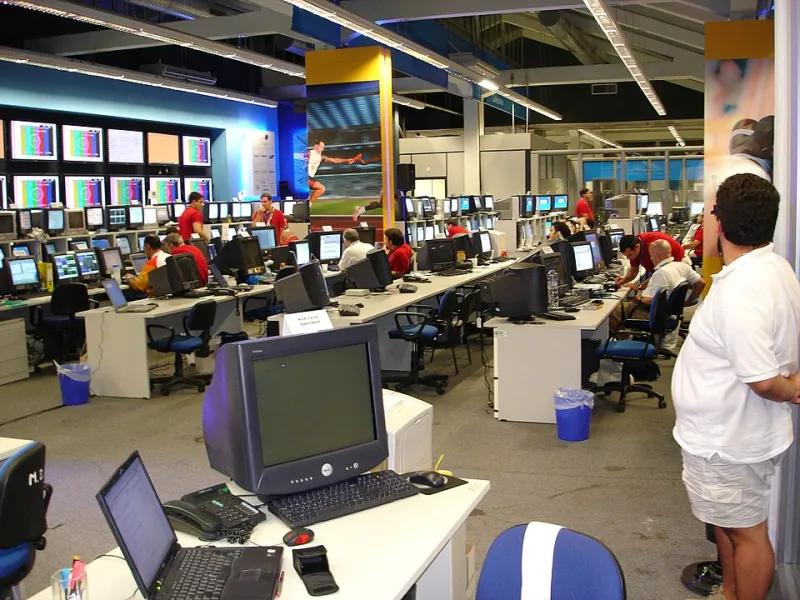
Every workday afternoon, an enormous data center switches on across the United States. It has no raised floor, no cooling contract, and no facility manager. It lives in laptops propped open in coffee shops from Seattle to Boston, in desktop towers humming under desks in home offices, and in workstations rendering nothing more demanding than a Slack thread.
The machines are on. That is the salient fact. A laptop plugged in at 2 PM draws power whether its CPU is busy or not, and the overwhelming majority of the time, it is not. Industry telemetry consistently places average CPU utilization on consumer and knowledge-worker machines in the single digits during business hours. The hardware exists to do far more than it is asked to do. It simply is not being asked.
Sizing the Idle Afternoon
Rough figures illustrate the scale. The United States counts well over 100 million active PCs in business and home-office use, with the installed base of capable consumer machines — those with modern multi-core processors and, increasingly, discrete GPUs — comfortably in the tens of millions. If even 5 percent of that fleet participates in a distributed compute marketplace during working hours, contributing a conservative 30 percent of its spare cycles, the aggregate supply rivals a mid-sized commercial data center.
The economics are what make this fleet interesting rather than merely large. A hyperscale facility must amortize land, power contracts, cooling, and hardware before a single cycle is sold. The afternoon fleet's costs are already sunk: the machine was purchased for other reasons, the power is already being consumed, and the network connection is already paid for. Marginal compute from this source approaches zero cost to the contributor, which means even modest per-hour payouts represent pure yield on an otherwise dormant asset.
Who Is Brokering the Cycles
A first generation of marketplaces has emerged to test this thesis. Platforms in the vein of Salad, Vast.ai, and Grass have demonstrated that individuals will route spare capacity to third-party workloads in exchange for payment, whether in dollars or points. Most of these marketplaces have concentrated on gaming PCs and night-time GPU availability, where the hardware is strongest and the security stakes are lower.
The daytime fleet is a different proposition. Business-hours machines are frequently locked down by employer policy, sit behind restrictive corporate networks, and contain sensitive data. Yet they also represent the largest and most consistent block of idle capacity in the country, because knowledge workers follow predictable schedules. A marketplace that solves the daytime problem — machines that are on, connected, and nearly idle from 9 to 5 — unlocks a supply curve that the gaming-focused platforms have only skimmed.
The Trust Problem, Stated Plainly
Three mechanics stand between the afternoon fleet and viability at scale.
Isolation. Contributors must be able to guarantee that executed workloads cannot touch local files, credentials, or browsing sessions. Hardware-backed enclaves, containerized execution with strict capability limits, and attestation APIs are the tools making this credible. The contributing machine's owner needs an auditable answer to the question, "What exactly ran on my laptop while I was in that meeting?"
Workload vetting. The inverse concern matters just as much. Enterprises purchasing cycles from a distributed fleet need assurance that proprietary code and data are not executing on an unknown laptop in a coffee shop. This pushes daytime consumer compute toward workloads that tolerate untrusted hardware: batch rendering, model evaluation on already-public data, simulation sweeps, and embarrassingly parallel tasks where the data never leaves the buyer's control or is encrypted end to end.
Payment mechanics. Compensation must be granular, verifiable, and frictionless. Per-minute metering of verified compute, with payouts settled through standard rails or earned credits, keeps the contributor's side simple. The platforms that survive will be those that make the ledger legible — contributors should be able to see, in plain terms, what ran, for how long, and what it earned.
Why Afternoon Beats Midnight
The home-lab movement has already proven the night-shift model: machines contribute capacity while their owners sleep. But the night fleet is episodic and hardware-heterogeneous in ways that complicate scheduling. The afternoon fleet is the opposite — predictable, synchronized, and refreshed on corporate replacement cycles. IT departments refresh laptops every three to four years, which means the daytime fleet's average hardware profile is newer than the average home server.
There is also a geographic argument. Distributed capacity concentrated in residential and commercial districts sits close to users and edge demand, in contrast to the handful of remote data center markets. For latency-tolerant but location-sensitive workloads, that proximity carries value.
The Realistic Path Forward
None of this suggests the afternoon fleet replaces the cloud. It will not. What it can become is a genuine secondary market: a source of discounted capacity for workloads that prioritize cost over guaranteed latency, tapped by the same orchestration layers that already broker spot instances and internal compute exchanges inside enterprises.
The untapped data center, in other words, is not a metaphor. It is a quantifiable inventory of powered-on, underused silicon, renewed automatically by corporate procurement every few years. The platforms that treat it as an asset class — with real attestation, real metering, and real payouts — will be the ones that finally put the 2 PM laptop to work.