Barns, Basements, and Bandwidth: The Rural Economics Rewriting Where Compute Lives
The Kilowatt Divide
The average residential electricity rate in Hawaii hovers above 40 cents per kilowatt-hour. In parts of Nebraska, North Dakota, and eastern Washington, co-ops and municipal utilities deliver power for under 9 cents. For a single-GPU node running around the clock, that spread alone can swing annual energy costs by more than $2,000. For a rack, multiply accordingly.
This is the arithmetic quietly drawing a new generation of compute operators away from metro areas. Distributed computing platforms have made it possible to monetize spare capacity anywhere a fiber line terminates, and increasingly, that line terminates in places where land is cheap, air is cool, and the neighbor's loudest complaint is a rooster.
Fiber Finally Catches Up
The rural compute thesis would have been dead on arrival a decade ago, when broadband penetration outside suburbs was spotty at best. Federal programs, including successive rounds of USDA ReConnect funding and the BEAD initiative, have pushed fiber deeper into counties that carriers once ignored. Symmetric gigabit connections are now routine in towns of 5,000 people across the Midwest.
Latency remains the honest caveat. A node in rural Kansas will not serve a low-latency trading workload in Chicago. But distributed compute is not uniformly latency-sensitive: batch rendering, model fine-tuning, dataset processing, and cryptographic workloads tolerate 20 to 40 extra milliseconds without meaningful penalty. The workloads that fit the rural profile are precisely the workloads that dominate distributed networks today.
Three Operators, Three Ledgers
Consider the profile of operators now common on distributed compute marketplaces.
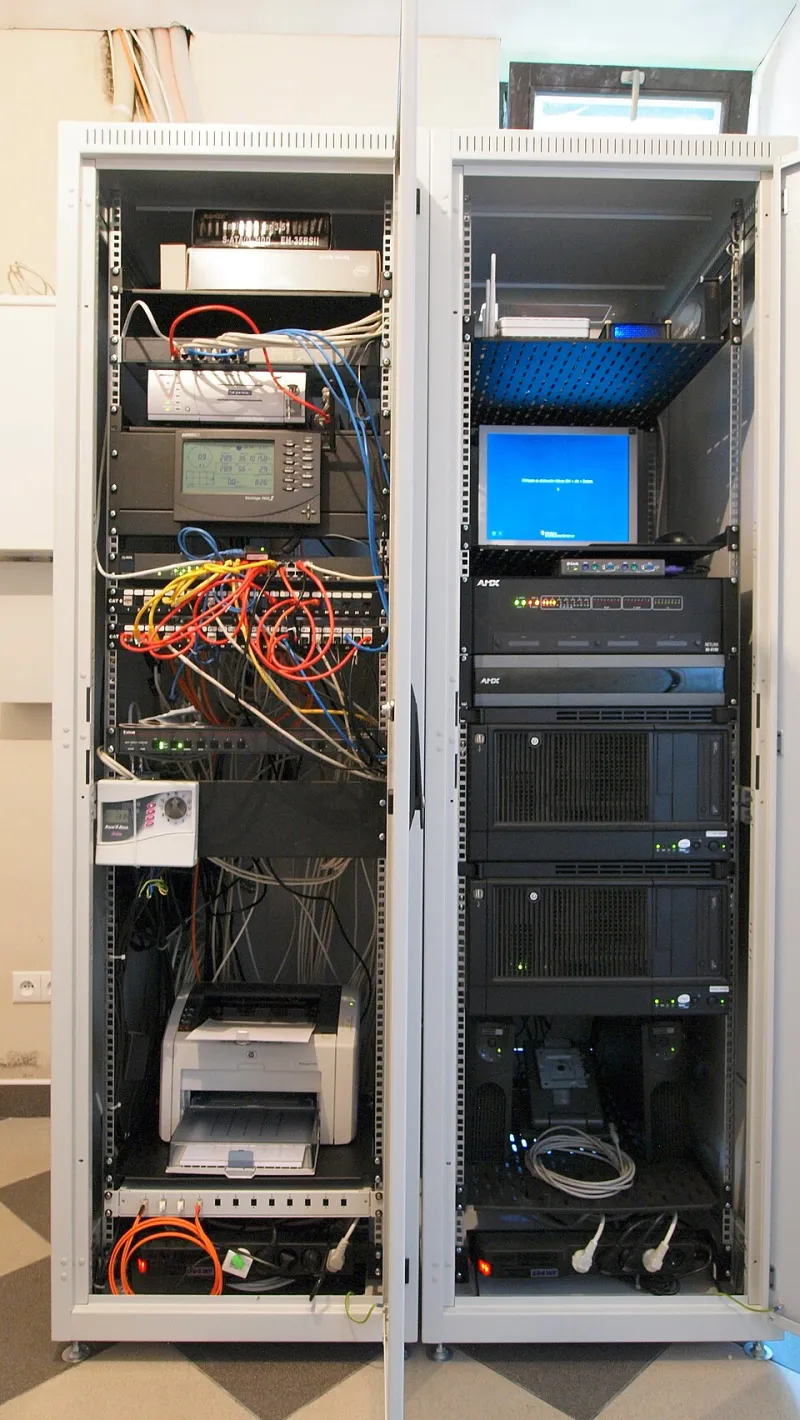
A retired utility lineman in southern Missouri runs a four-node cluster in a converted equipment shed. His co-op rate sits near 8.5 cents per kWh, and his ambient climate means cooling costs are negligible eight months of the year. Gross monthly revenue from GPU rental hovers around $700; his all-in costs, including hardware amortization, run under $250.
A grain farmer in the Red River Valley added a six-node rack to his machine shed, piggybacking on a three-phase service already installed for grain-drying equipment. His tax adviser treated the deployment as a supplemental agricultural enterprise, unlocking depreciation schedules that further improved after-tax returns.
A former schoolteacher in upstate New York leases space in a family barn with a dedicated 100-amp subpanel. Her county economic development office, eager to attract any business with a fiber footprint, offered a small property tax abatement under a microenterprise program.
The common thread is not sophistication. It is location arbitrage: the same hardware, in a cheaper place, producing a meaningfully better margin.
Urban Versus Rural: The Full Ledger
Urban and suburban deployments retain real advantages. Proximity to internet exchange points, faster repair logistics, denser customer demand, and physical security all favor the city. Commercial power in a dense metro, however, routinely runs 15 to 25 cents per kWh, and cooling in a Phoenix garage or a Brooklyn brownstone is a genuine expense rather than a rounding error.
When the full ledger is tallied, power, cooling, space, taxes, and downtime, the rural operator frequently wins on cost per delivered compute-hour by 30 to 50 percent. In a market where pricing is set by network-wide competition rather than local costs, that margin is the entire business.
A Practical Framework for Location Arbitrage
For readers evaluating their own location, four variables dominate:
- All-in electricity cost, including demand charges and tiered rates, not just the headline number on the bill.
- Climate and cooling load, measured in how many days per year ambient temperatures allow free cooling.
- Uplink quality, specifically symmetric upload bandwidth and monthly data caps, which matter more than raw download speed.
- Local tax treatment, including whether a county treats compute revenue as a business, a hobby, or something in between, and whether depreciation or abatement programs apply.
Score those four honestly, and the answer of whether a node in your barn, basement, or garage makes sense usually becomes obvious within a spreadsheet session.
The Homestead Instinct, Updated
There is a familiar cultural pattern here. Rural America has always monetized what it had in abundance: land, power, water, and now bandwidth. Distributed compute networks do not require relocation to a tech hub, only a reliable connection and patience with hardware maintenance. As capacity markets mature, the cheapest place to run a node will increasingly be the place nobody thought to look: down a gravel road, behind a grain bin, where the power is cheap and the machines never sleep.