Renegotiating the Promise: How Distributed Idle Compute Is Forcing a Rethink of Enterprise SLA Architecture

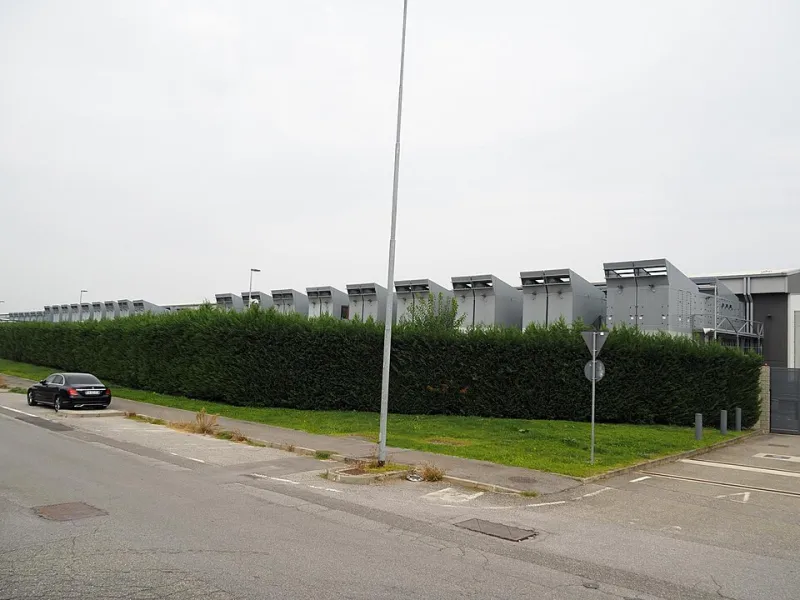
Photo: NASA, Public domain, via Wikimedia Commons
For decades, the enterprise service level agreement functioned as a relatively straightforward document. An organization contracted with a cloud provider or data center operator, negotiated an uptime percentage—typically somewhere in the 99.9 to 99.99 percent range—and held that single vendor accountable when things went wrong. The SLA was, at its core, a bilateral promise backed by financial penalties and a clearly defined chain of responsibility.
That architecture is now under pressure from an unexpected direction: the growing organizational appetite for idle compute.
As enterprises discover that substantial portions of their own hardware sit underutilized for hours or days at a time—and as platforms emerge to coordinate those dormant resources into coherent processing networks—the clean, single-vendor SLA model is fracturing. What replaces it is more complex, more adaptive, and, for many risk-averse organizations, considerably more unsettling.
The Heterogeneous Compute Problem
Traditional SLAs derive their enforceability from homogeneity. When every workload runs on identical infrastructure managed by one accountable party, measuring compliance is straightforward. Distributed idle compute introduces a fundamentally different condition: workloads may traverse a mix of on-premise servers, edge devices, leased co-location hardware, and contributed compute from partner organizations—each with its own failure profile, network latency, and maintenance schedule.
This is not a hypothetical edge case. Enterprise technology teams piloting idle compute strategies routinely encounter what architects are beginning to call the "provenance problem"—the inability to guarantee, at any given moment, precisely which physical resources are executing a given task and what contractual protections, if any, govern those resources.
For a development environment or a batch analytics pipeline, this ambiguity may be entirely acceptable. For a patient-facing healthcare application or a real-time financial clearing system, it is not.
How Early Adopters Are Structuring New Frameworks
A subset of enterprises—concentrated in sectors with high internal compute density, such as manufacturing, logistics, and media production—have begun constructing what their technology teams variously describe as "tiered SLA architectures" or "workload-class routing policies."
The core principle is segmentation. Rather than applying a single uptime commitment across all workloads, these organizations classify each application and pipeline by its tolerance for interruption, latency variance, and data locality requirements. Mission-critical workloads retain their traditional single-vendor guarantees. Everything else becomes a candidate for idle compute routing, subject to a separate—and deliberately more flexible—set of performance expectations.
One large logistics firm operating distribution centers across the Midwest structured its idle compute rollout around three explicit tiers. Tier one workloads, including real-time shipment tracking and warehouse management systems, remained on dedicated infrastructure with conventional SLA protections. Tier two workloads, such as demand forecasting models and route optimization batch jobs, were routed to idle compute pools with a looser 95 percent completion-within-window guarantee. Tier three tasks—internal reporting, model retraining pipelines, and archival processing—carried no uptime commitment at all, running opportunistically whenever resources were available.
This tiered model did not eliminate SLA complexity. It redistributed it. The firm's technology leadership invested heavily in orchestration tooling capable of dynamically classifying and rerouting workloads as resource availability shifted, and in monitoring systems that could surface SLA compliance data across heterogeneous environments in a unified dashboard.
The Contractual Gap Nobody Wants to Talk About
Beyond the technical architecture, distributed idle compute surfaces a contractual gap that legal and procurement teams are only beginning to grapple with seriously.
When a workload fails on a public cloud platform, the path to remediation—and to any applicable service credits—is well-established. When that same workload fails because an on-premise server in a regional office was unexpectedly taken offline for maintenance, or because a contributed edge node dropped off the network during a storm in rural Tennessee, accountability becomes murky.
Some enterprises are addressing this by treating their idle compute orchestration layer as the accountable party, effectively internalizing the SLA rather than externalizing it to a vendor. The internal platform team assumes responsibility for meeting workload completion commitments, regardless of which underlying resources are used. This approach demands mature internal governance structures and a willingness to hold engineering teams accountable to metrics that were previously a vendor's problem.
Others are experimenting with consortium-based SLA models, particularly in industries where multiple organizations contribute compute to a shared pool. These arrangements are still nascent and largely unproven at scale, but early frameworks suggest that collective accountability mechanisms—including shared monitoring, joint incident response protocols, and pooled financial reserves for remediation—can provide a credible substitute for traditional vendor-backed guarantees.
Technical Foundations for SLA Viability
Any serious attempt to maintain SLA commitments across distributed idle infrastructure rests on several technical prerequisites that enterprises frequently underestimate during initial planning.
First, workload checkpointing. Tasks running on idle resources must be designed to save state at regular intervals so that interruptions—which are inherently more frequent in heterogeneous environments—result in partial restarts rather than complete failures. This requires application-level changes that many legacy enterprise systems were never designed to accommodate.
Second, real-time resource telemetry. SLA compliance across a distributed pool is impossible to manage without continuous visibility into resource health, utilization, and availability across every node in the network. Organizations that lack unified observability infrastructure will find SLA enforcement practically unworkable.
Third, automated failover with intelligent placement. When a resource becomes unavailable, the orchestration layer must be capable of not merely restarting the workload elsewhere, but of placing it on a resource that meets the specific performance requirements of that workload class. Naive round-robin failover is insufficient.
The Risk-Averse Path Forward
For enterprises that have built their reputations—and their regulatory compliance postures—on ironclad uptime guarantees, the shift toward distributed idle compute does not need to be abrupt. The most successful early adopters have treated it as an incremental expansion of their compute portfolio rather than a wholesale replacement of their existing infrastructure contracts.
The practical implication is that SLA renegotiation should follow workload migration, not precede it. Organizations that attempt to rewrite their uptime commitments before they have operational experience with idle compute in their specific environment will find themselves making promises—or concessions—they cannot yet confidently evaluate.
What is clear is that the SLA as a static, vendor-centric document is losing its primacy as the defining instrument of enterprise compute reliability. In its place, a more dynamic, workload-aware, and internally governed model is emerging—one that treats uptime not as a purchased guarantee but as an engineered outcome. For organizations willing to invest in that engineering, the potential to dramatically reduce compute costs without sacrificing operational integrity is substantial. The work of building that confidence, however, belongs entirely to the enterprise itself.